
The cost-effectiveness of coal is prominent, and the industrial chain is entering an expansion period.
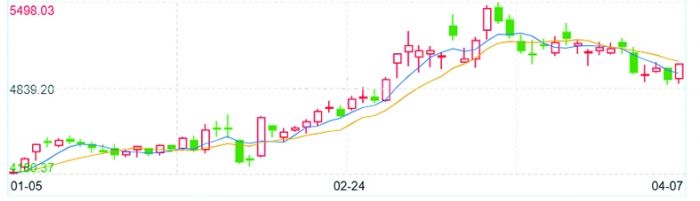
Coal Index Daily K-line Chart
The conflict between the United States and Iran remains unresolved, and international oil and gas prices continue to rise. Among them, Brent crude oil once exceeded $119 per barrel, and the benchmark Newcastle thermal coal futures price in Asia soared to $150 per ton. Under the high oil and gas prices, coal is once again coming into the spotlight thanks to its outstanding cost-effectiveness.
Oil and gas prices have soared, while coal has quickly taken over the role.
Recently, geopolitical risks such as the US-Israel conflict have driven up oil and gas prices. In the face of high oil and gas costs, the global energy landscape is quietly changing: On one hand, countries like Japan, South Korea, and Europe are restarting coal power or increasing the power generation capacity of coal-fired power plants, thereby boosting global demand for thermal coal; on the other hand, industrial enterprises, in an effort to control costs, prioritize the use of coal as a heat source and power source, thereby increasing coal consumption.
"When international crude oil and natural gas prices rise rapidly, the relative competitiveness of coal in power generation, industrial fuel, and some chemical raw materials will significantly increase. The expected demand and safety premiums for coal will also rise," Guo Bowei, executive director of the Global Energy Strategy Research Center at Renmin University of China, told the Shanghai Securities News. This round of international oil and gas price shocks has strengthened the substitution effect among energy sources.
The reporter from Shanghai Securities News recently conducted interviews with coal enterprises in Shanxi and Henan provinces and learned the following situation, which confirmed the above judgment. "The rapid increase in international energy prices has caused panic. Some enterprises replenished and stockpiled supplies, further driving up coal prices," a person in charge of a Shanxi coal enterprise said.
Meanwhile, the increase in international coal prices is providing strong support for domestic coal prices through the phenomenon of inverted import costs. "The landed prices of imported coal are generally higher than domestic prices. Now, coastal power plants and factories are all calculating their economic benefits and turning to purchase domestic coal." A coal trader told a reporter.
This shift has directly tightened the domestic supply and demand situation. The benchmark price of 5500 kcal thermal coal at Qinhuangdao Port rose from approximately 745 yuan per ton at the end of February to about 761 yuan per ton at the end of March, showing a "weak season with strong prices" trend. The price increase of coking coal was even more significant. The price of coking coal 2650 rose from 1082.5 yuan per ton at the end of February to 1294 yuan per ton at the end of March, with a single-day increase of over 9%.
The profit level of the coal industry chain has improved.
The benefits brought about by the increase in oil and gas prices not only benefit the upstream coal mining enterprises, but also further spread to the midstream coal chemical industry chain.
According to the data, coal, as a basic energy source, can replace crude oil in the fields of industrial fuel and chemical raw materials. Taking ethylene/polyethylene (PE) as an example, it can be produced from crude oil to obtain ethylene and then used to manufacture polyethylene, or it can be produced through the coal-based olefin process.
The weekly report on polyolefin investment strategy released by the commodity futures team of Zhongcai Futures on March 15th shows that, against the backdrop of a significant increase in crude oil prices, the cost pressure on oil-based polyolefin enterprises has significantly intensified, and they have generally fallen into a cost-differential predicament: In the current week, the single-ton gross profit of ethylbenzene-based polyethylene enterprises decreased by 1,209 yuan compared with the previous week, with a loss of 2,882 yuan per ton; the single-ton gross profit of oil-based polypropylene (PP) enterprises dropped sharply by 1,084 yuan, with a loss of 2,307 yuan per ton.
Meanwhile, the profits of coal-based olefin enterprises have significantly improved. The data shows that the average gross profit per ton of coal-based PE increased by 888 yuan compared with the previous period, reaching 1,453 yuan per ton; the profit per ton of coal-based PP increased by 1,014 yuan, reaching a high of 2,109 yuan per ton.
Compared with the traditional chemical industry route that relies on oil, coal-based chemical industry uses coal as its core raw material. When oil prices rise significantly, the cost advantage of raw materials is significantly magnified. According to a research report by Everbright Securities, product prices rise in tandem with the petrochemical industry chain, while the cost end remains relatively stable, creating a clear profit gap. As a result, the overall profit space of the coal chemical industry expands.
Under this circumstance, the profit situation of related enterprises has significantly improved. A relevant official from Huala Hengsheng introduced that recently, the prices of international crude oil and methanol and other chemical products have risen, which has brought certain benefits to the coal chemical industry. The company relies on the flexible co-production model and will flexibly adjust its production and operation as well as product structure according to market conditions. China Coal Energy and Yanzhou Coal Energy also clearly stated that the increase in the prices of chemical products has a positive contribution to the company's gross profit.
However, the coal chemical industry shows significant differentiation. Guo Bowei analyzed that the main beneficiaries in the short term are mainly three types of entities: First, upstream enterprises that mine coal and have resource guarantee capabilities; second, integrated enterprises in the coal chemical processes such as coal-to-methanol, coal-to-olefins, and coal-to-oil; third, some chemical enterprises that can replace overseas supply and increase their market share in the domestic market.
"Generally speaking, coal chemical enterprises with a high proportion of purchased coal and lacking resource lock-in capabilities, as well as traditional petrochemical enterprises that rely on imported oil and gas raw materials, will face greater cost pressure." Guo Bowei believes that these related specialized fields may encounter more pressure in the future.
Leading enterprises are accelerating their efforts to establish an integrated and high-end structure.
Under the changing energy landscape, leading enterprises have already taken action.
Yanjing Energy clearly stated in its annual report that in 2026, it will stabilize the basic position of the coal industry and do everything possible to release the production capacity of coal mines in Shaanxi, Inner Mongolia and Xinjiang regions. The company plans to produce 186 to 190 million tons of commercial coal throughout the year, an increase of 400,000 to 800,000 tons compared to the previous year. At the same time, it will promote the coordinated and differentiated development of the four chemical bases in Shandong, Shaanxi, Inner Mongolia and Xinjiang, deepen the high-grade coal conversion, and add 1.6 million tons of ethylene and 500,000 tons of coal-to-oil. The company also plans to explore new paths for coupling green hydrogen, green alcohol, green ammonia with traditional coal chemical industries, and strive to increase the proportion of high-end chemical products to over 70% by the end of the "15th Five-Year Plan".
China Coal Energy is also promoting the integrated development of "coal + coal chemical industry". The Weizigou Coal Mine (2.4 million tons/year) and Li Bi Coal Mine (4 million tons/year) under construction by the company are being actively developed. They are scheduled to go into operation by the end of 2026 and 2027 respectively. The 900,000-ton/year polyolefin project in Yulin Base is expected to go into operation by the end of 2026.
Looking ahead to 2026, Yankuang Energy believes that the external environment will remain complex and volatile. The domestic coal supply and demand will shift from a relatively loose situation to a more balanced and temporarily tight pattern, with the price center rising compared to 2025. The geopolitical conflicts in the Middle East have driven a significant increase in international oil and gas prices, and the continuous release of coal substitution demand has led to an improvement in the supply and demand situation, which has in turn strengthened international coal prices. In addition, the international oil and gas price gap has widened, and the cost advantages of industries such as coal-to-methanol, coal-to-oil, and coal-to-olefins have been fully demonstrated. Coupled with the expansion of the chemical product supply gap in the Middle East and other factors, the prices of coal chemical products both domestically and internationally will increase rapidly.
"Over the next period, the prices of coal and coal-based chemical products are likely to show a pattern of high-level fluctuations and structural differentiation," said Guo Bowei. The current prices already incorporate a considerable degree of geopolitical risk premiums, and whether these premiums can be sustained depends on the duration of the conflict, the recovery of maritime transportation, and the actual effects of production adjustments by major oil-producing countries.
When discussing the potential impact of a future drop in oil prices, Guo Bowei believes that the coal price will not fall rapidly in tandem. "There is indeed a linkage between the two, but the decision-making mechanisms are different. To a greater extent, the coal price is still determined by domestic supply and demand, inventory levels, changes in imports, long-term contract mechanisms, and policy regulations."

