
The supply side was disrupted beyond expectations. The chemical industry is striving to break through to a more diversified and low-carbon model.
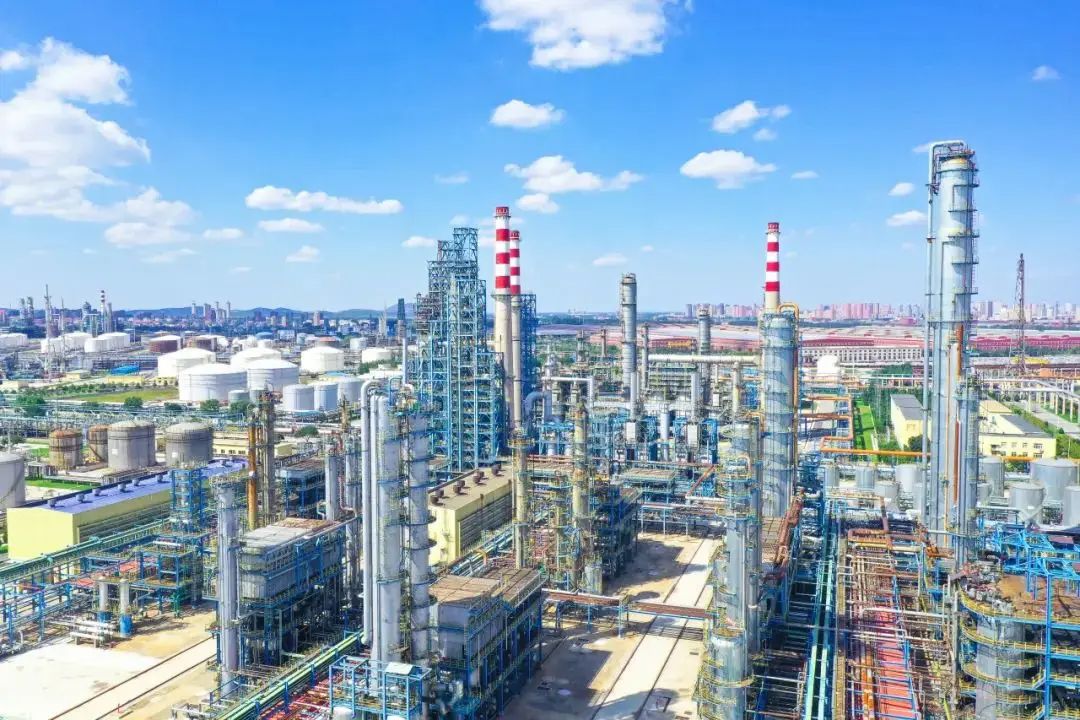
The military conflict that has been ongoing in the Middle East for over a month has significantly disrupted the global chemical industry supply chain.
"The current high oil prices have created a transmission pattern for the global chemical industry chain where the upstream benefits, the midstream is under pressure, and the downstream experiences inflation." Yang Hanfeng, the retired vice president of Singapore Golden Eagle Group's China company, told the Shanghai Securities News reporter.
As a global supplier of core chemical raw materials, the turmoil in the Middle East has triggered a chain reaction across the entire industry through two main channels: the obstruction of shipping through the Strait of Hormuz and the damage to Iranian petrochemical facilities.
Several securities firms have pointed out in their latest research reports that this conflict has had a more significant impact on the global chemical industry than expected. It has forced the chemical industry to accelerate its restructuring in terms of raw material layout, production mode, and development direction. Diversification and low-carbonization have become the core themes of the industry's transformation.
Unstable supply end leads to chain fluctuations in chemical products.
The geopolitical conflicts in the Middle East have directly affected the supply of some upstream chemical raw materials, and the impact has gradually spread to the midstream manufacturing and downstream application stages of related products, resulting in a full industrial chain disruption.
Specifically, Iran is the second-largest producer of methanol globally and the second-largest producer of ethylene in the Middle East. According to authoritative statistics, approximately 60% of China's methanol imports come from Iran. Due to the current geopolitical conflict in the Middle East, shipping in the Strait of Hormuz has been disrupted, and shipping costs in the surrounding areas have significantly increased. This has further pushed up the central price of oil and gas. As oil and gas are the raw materials for major chemical products, the price increase of oil and gas brings the most direct impact of causing the prices of some chemical raw materials to soar. According to market monitoring by Baocai Yingfu, as of April 7th, the prices of methanol, sulfur, propylene, and ethylene have risen by 46%, 73%, 67%, and 57% respectively compared to the beginning of the year, with year-on-year increases of 30%, 169%, 44%, and 33% respectively.
Meanwhile, with the sharp increase in upstream raw material prices, the shortage of raw materials has led to coordinated production cuts by global refining and chemical enterprises. According to monitoring by Longzhong Information, since the escalation of the regional conflict in the Middle East, the operating rates of refineries in India, Japan, South Korea, and China have all decreased to varying degrees compared to before the conflict. And as the refining load in Asia has declined, the prices of most downstream products such as olefins and aromatics have seen significant increases.
At the downstream end of the industrial chain, the sharp increase in raw material prices has raised the production costs of related enterprises, and their products are facing pressure for price adjustments. For instance, in the downstream industries such as textiles and plastics, the proportion of raw material costs is generally over 60%. Some enterprises, due to having signed fixed-price orders in the past, are unable to pass on the pressure of raw material price hikes to the end consumers, and have fallen into the predicament of "incurring losses upon receiving orders".
Yang Hanfeng told reporters that the sharp increase in oil prices is rapidly spreading along the upstream, midstream and downstream of the industrial chain, creating a full-chain shockwave of "energy - petrochemicals - agricultural products". For chemical enterprises, crude oil is the "mother substance" of chemical products. The rise in oil prices directly raises the costs of basic chemical raw materials such as naphtha, ethylene, and propylene. For downstream product enterprises such as plastics, fibers, and rubber, if they cannot fully pass on the costs to consumers, their gross profit margins will significantly decline.
According to our reporter's investigation, in response to the supply chain disruptions, industry enterprises are actively establishing a response system that focuses on "short-term emergency cost reduction and long-term transformation and upgrading".
In the context of such fluctuating international oil prices, enterprises' inventory management and hedging strategies must shift from "passive defense" to "active risk aversion". Yang Hanfeng suggests that enterprises should keep their inventory levels within a safety margin of 15 to 30 days, rather than blindly hoarding. At the same time, they can establish "virtual inventories" through futures trading.
Take Hengyi Petrochemical, a leading refinery company, as an example. The company recently stated on the investor interaction platform that it has a mature inventory management system, and the company's inventory scale is in line with its production and operation scale. The increase in international crude oil prices has led to an increase in the prices of related products in the industrial chain, and at the same time, it has also increased the inventory value of the goods in stock.
The industry "breakthrough" towards diversification and low-carbon development
Wu Qitezhi, the director of the Yuanda Information Securities Research Institute, believes that in the long term, the chemical industry is currently in a period of supply-demand pattern reversal after having absorbed its production capacity over the past few years. The geopolitical conflicts in the Middle East may accelerate the global inventory cycle resonance, and the chemical industry is expected to undergo a value revaluation.
It is worth noting that in the face of the profound transformation in the chemical industry in recent years, China's chemical raw material system is undergoing a transition from traditional processes to green and low-carbon ones.
Recently, the Huajin Amei Fine Chemical and Raw Materials Project located in Panjin City, Liaoning Province, completed the intermediate handover of the first 3 sets of equipment just 72 hours ago. Subsequently, another 4 sets of production facilities achieved the same handover on the same day.
This project is a Saudi investment in China, with a total planned investment of 83.7 billion yuan. The construction content includes 32 sets of process facilities such as 15 million tons/year of refining, ethylene, and PX, as well as supporting utility engineering and auxiliary facilities. After the project is put into operation, it is expected to promote the local petrochemical industry to achieve an optimization and upgrading of the entire industrial chain from crude oil, refining to organic chemicals and fine chemicals through the integration of refining and chemical processes.
Baofeng Energy recently stated on the investor interaction platform: Currently, the company has a production capacity of 30,000 standard cubic meters per hour of green hydrogen and 15,000 standard cubic meters per hour of green oxygen at the Ningdong Base. At present, the company's planned annual green hydrogen production capacity is 3.1 billion standard cubic meters, and it will also achieve a large-scale production capacity of 1.45 million tons of green methanol and 500,000 tons of green olefins per year.
Technological innovation has also led the industrial chain to shift from relying solely on chemical raw materials to diversified supply. Moreover, some key raw materials have achieved domestic substitution.
Recently, the project on the development and industrialization of key technologies for high-quality adipic acid from caprolactam, jointly completed by Yangnong Group, Xiamen University and Ningxia Ruitai, won the first prize of the 2025 Petrochemical Association Science and Technology Progress Award. The company has built the world's first 10,000-ton-scale facility, using caprolactam as the raw material to bypass the shortcomings of traditional processes.
Diamine is an indispensable core monomer for high-performance materials such as nylon 66, special nylon, and high-end polyurethane curing agents. It is widely used in important fields of the national economy, including automobiles, electronics and electrical appliances, and rail transportation. However, for a long time, China's diamine production has been highly dependent on the traditional process centered on adiponitrile, and the security of the industrial chain and the distribution of profits have been subject to external control, becoming a bottleneck restricting the development of the high-end chemical new materials industry.
Yangnong Group stated that the company currently has an annual production capacity of 60,000 tons of nylon 66 and 40,000 tons of adipic acid. This year, it will continue to expand its production capacity to consolidate its competitive advantages. At the same time, it will extend to high-value-added downstream products, actively develop differentiated nylon 66 and special nylon, and build a more competitive nylon new material industrial cluster.
As the world's largest producer and consumer of chemical products, China's chemical industry enjoys a full-chain cost advantage. Over the past 10 years, China's investment in chemical research and development has doubled, and the number of patent applications for fine chemicals ranks first globally. As overseas enterprises gradually lower the barriers for technological cooperation, the frequency of technological cooperation between China and foreign countries in fields such as polyolefins and pesticides has significantly increased, promoting the transfer of chemical innovation and research to China. At the same time, Chinese enterprises are accelerating their overseas expansion and setting up factories, further expanding their global production capacity layout. Their global market share and pricing power have continued to increase, making them the core recipient of global chemical industry transfer.

