
Natural gas and renewable energy: The best partners who complement each other
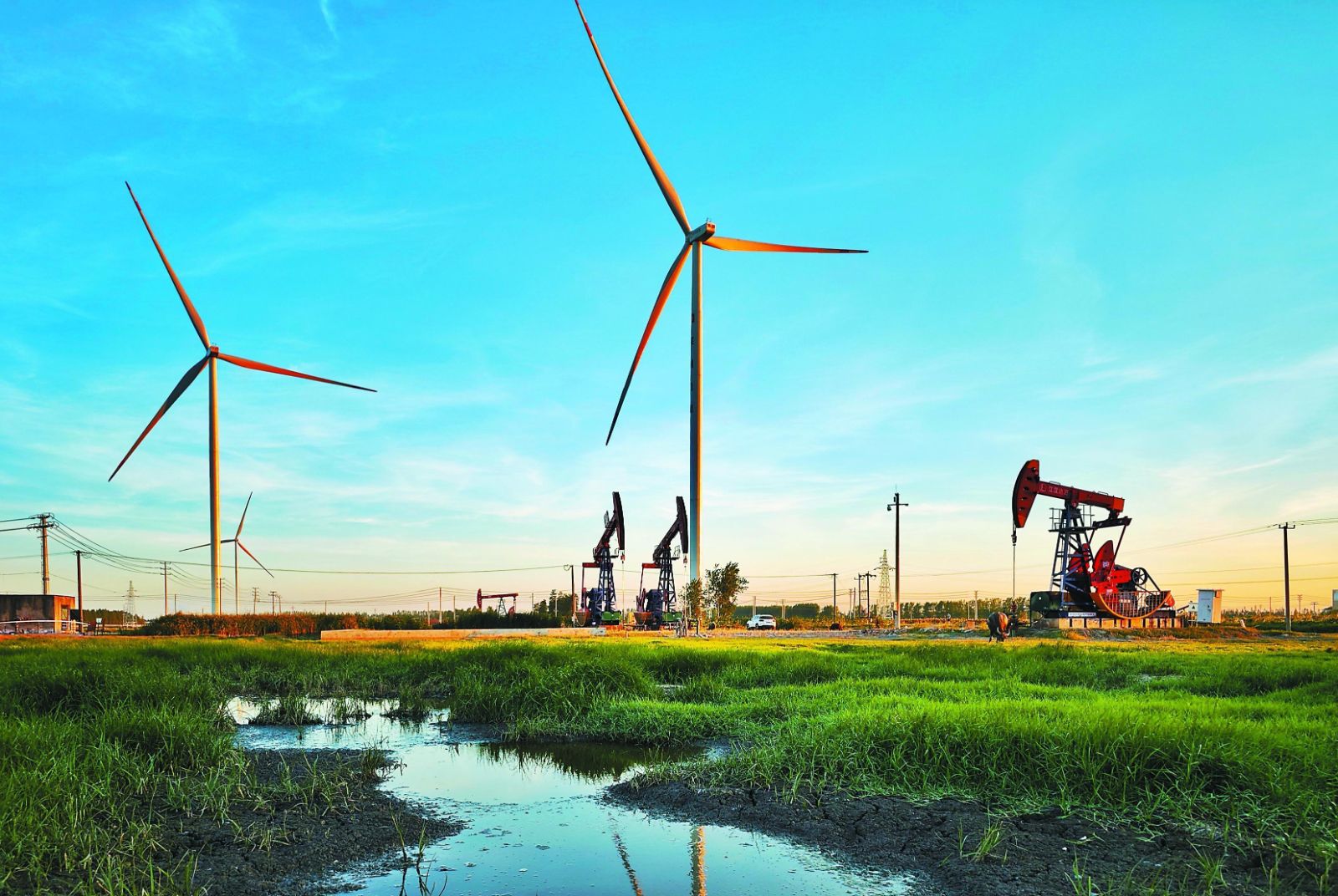
In the context of intensified global climate change and accelerated energy transition, natural gas, as a clean and efficient fossil energy source, will still hold an important position in the future energy system. The integrated development of natural gas and renewable energy is one of the important development directions in the industry.
Since China proposed the "dual carbon" goal, the process of energy transformation has significantly accelerated. Renewable energy, characterized mainly by green and zero-carbon, has developed rapidly and has become an important part of China's new energy system. Data released by the National Energy Administration shows that as of the end of May this year, the cumulative installed power generation capacity across the country was approximately 3.04 billion kilowatts, an increase of 14.1% year-on-year. Among them, the installed capacity of solar power was approximately 690 million kilowatts, an increase of 52.2%; the installed capacity of wind power was approximately 460 million kilowatts, an increase of 20.5%; and the installed capacity of hydropower was approximately 430 million kilowatts, an increase of 2.2%.
Electricity, as a special commodity, has the most significant characteristic of being difficult to store at low cost and on a large scale. Its production, transmission, and usage all require real-time balance. Renewable energy has the characteristic of "relying on the weather", and the power generation output depends on climate and weather conditions changes. It fluctuates significantly on various time scales such as year, month, day, and hour. To balance the fluctuations on both the power generation and consumption sides, other power generation methods are needed for peak shaving. When the power generation output of renewable energy increases, other power generation methods need to reduce their load to ensure the output of renewable power; when the power generation output of renewable energy is blocked, other electricity needs to promptly take over to ensure stable and reliable power supply. What's more challenging is that the power generation output of renewable energy being blocked often coincides with the peak of electricity demand, further amplifying the supply-demand gap. Therefore, the rapid development of renewable energy necessarily requires more flexible power regulation measures.
The power regulation methods that have achieved large-scale commercial application in our country mainly include electrochemical energy storage, pumped hydro storage, flexibility transformation of coal-fired power plants, and natural gas power generation. After comprehensive comparison of technical and economic aspects, the unit cost of natural gas power generation is relatively high, but its investment cost is moderate. It has no special requirements in terms of location and safety, and is the only regulation method that can respond to demand in seconds and operate for a long period. Moreover, its carbon emissions are lower than those of coal-fired power plants. The dual advantages of flexibility and relative cleanliness make natural gas the best partner for renewable energy. It can be combined with various renewable energy sources to continuously "green and reduce carbon" in the construction of China's new energy system.
The integration of natural gas and hydropower
Hydropower is affected by the seasonal fluctuations of precipitation, and there is a clear periodic change of "abundant water period - scarce water period" throughout the year. For example, the Yangtze River is in the "scarcity period" from November to the following April, while other periods are "abundance periods". The scarcity period often lasts for several months. When drought or cold waves occur and electricity demand surges, natural gas power generation becomes an effective peak-shaving measure. In 2022-2023, the operating hours of hydropower units showed a significant seasonal variation. When hydropower output decreased, natural gas power generation units stepped in in a timely manner, demonstrating a remarkable complementarity. For instance, in the first half of 2022, precipitation was at a normal level, and the power supply-demand situation was relaxed. The hours of natural gas power generation decreased by 40% year-on-year. As precipitation continued to be scarce and the summer heat arrived in the second half of the year, the operating hours of hydropower decreased continuously, while natural gas power generation continued to rise to a high level of 10% to 20% year-on-year. In December, the hydropower output slightly improved, and natural gas power generation decreased by 40% year-on-year again. In 2023, the continuous drought led to another decline in the operating hours of hydropower, while natural gas power generation increased accordingly and synchronously.
In addition to the complementary regulation across the entire power system, hydropower and natural gas power generation can also be physically coupled and coordinated. The Sichuan-Chongqing region has abundant natural gas and hydropower resources, which provide the basic conditions for achieving a smooth power supply through the coupling of gas and water. The depleted gas fields after extraction can also be used as storage gas reservoirs, further enhancing the guarantee capacity of the gas-water coupling coordination. When the hydropower output increases during the abundant water period, cheap and zero-carbon hydropower can be used to ensure the power supply for gas field production and gas storage well injection, and it can also be exported externally. During the lean water period, natural gas power generation units can be activated simultaneously to utilize the gas production from the gas fields to ensure the overall stable heating of the project. When extreme conditions such as extreme cold or extreme heat occur during the lean water period, the project's regulation capacity can be further enhanced through the storage gas reservoir. Through the combination of natural gas power generation and hydropower, the fluctuations of hydropower during the abundant and lean water periods can be partially offset, achieving a low-carbon and stable power transmission.
Gas and photovoltaic integration
Unlike the seasonal variations of hydropower, photovoltaic power generation is affected by changes in sunlight. It experiences fluctuations of "low - peak - low" within a single day. Taking photovoltaic power generation as an example, it starts generating electricity after sunrise. As the sunlight intensifies, the output keeps increasing. It reaches its peak throughout the day in the middle of the afternoon, then gradually decreases, and completely returns to zero after sunset. At the same time, seasonal changes such as spring, summer, autumn, and winter also bring fluctuations in the output of photovoltaic power generation.
As the installed capacity of photovoltaic power generation increases, the grid's net load (the total load minus the output of new energy sources) will also experience fluctuations throughout the day. After sunrise, as the output of photovoltaic power generation increases, the net load decreases; at midday, when the output of photovoltaic power generation reaches its maximum, the net load drops to its lowest point; in the evening, as the output of photovoltaic power generation decreases, the net load rapidly increases and reaches its peak for the entire day; in the early hours of the night, as the electricity demand decreases, the net load also decreases.
This kind of hourly, high-load peak-shaving demand is precisely the area where natural gas power generators excel. In eastern China, provinces such as Jiangsu and Zhejiang, which have large-scale photovoltaic power generation capacity, have equipped large-scale natural gas power generators. In Qingdao, Shandong Province, an offshore photovoltaic power generation project combined with an onshore 9F heavy-duty gas turbine project has been constructed. During normal times, photovoltaic power generation is the main source, while during peak hours and at night, natural gas power generation is used, thus achieving the full utilization of solar energy resources, smooth consumption, and stable power supply.
In addition to the fluctuations caused by day-night changes, weather conditions and various unexpected factors also affect the output of photovoltaic power generation, requiring emergency peak shaving by natural gas power generation. During the total solar eclipse in the United States in April this year, the photovoltaic power generation in Texas almost completely dropped to zero at noon. The power shortage during this period was almost entirely filled by natural gas power generation, demonstrating the reliable emergency peak-shaving capability of natural gas power generation units.
To fully utilize the abundant solar energy resources of the Qinghai-Xizang Plateau, the Haixi region of Qinghai Province has constructed an integrated project of photovoltaic power generation, natural gas power generation, and energy storage. The project includes 6,000 megawatts of photovoltaic power generation units, 2,000 megawatts of natural gas power generation units, and 200 megawatts of energy storage batteries with a storage duration of 2 hours. Through the complementary coupling of different units, clean electricity can be smoothly transmitted. The actual operation shows that during the daytime when photovoltaic power generation is at its peak, the output of natural gas power generation decreases accordingly, and the energy storage batteries store electricity; at night when the output of photovoltaic power generation is zero, the output of natural gas power generation increases, and the energy storage batteries discharge to meet the power demand of the system. The integrated photovoltaic and energy storage project has a similar overall external output curve to the photovoltaic power generation curve, but natural gas power generation is increased at night while photovoltaic power generation is zero during the day, ensuring the power demand of the system throughout the day and night.
Integration of natural gas and wind power
Wind power is another important source of renewable electricity. Wind power can continue to generate electricity at night, partially filling the gap left by photovoltaic power generation. However, compared with the relatively fixed day-night peak and valley cycle of photovoltaic power generation, the randomness of wind power changes is greater. When there is no wind or weak wind, wind turbines have difficulty generating power. When the wind speed is too high, it is necessary to adjust the blade angle or take other control measures to stop the operation to protect the equipment, resulting in reduced power output. In actual operation, it often occurs that power dispatching requires thermal power units to reduce load in advance according to the meteorological forecast to ensure the consumption of wind power, but once the actual wind speed exceeds the upper limit of the wind turbine, thermal power needs to urgently climb to the peak for operation. Therefore, there is better complementarity between wind power and natural gas power generation.
Due to the unpredictable duration and timing of wind power output disruptions, the accompanying natural gas power generation projects often require the use of gas storage facilities to ensure timely supply of gas. Around 2005, the American power supplier Xcel Energy developed a 700-megawatt wind power project in Colorado and also constructed backup gas-powered generating units. Gas supplier CIG utilized the depleted oil and gas reserves in the state to build the Totem underground gas storage facility with a working capacity of 300 million cubic meters, and leased it all to one of Xcel Energy's subsidiaries for a lease term of 32 years. Through the collaboration of wind power and natural gas power generation, as well as the cooperation between power companies and gas companies, the wind power resources in the air and the gas storage facilities underground have been fully exploited. Power companies can ensure the clean and reliable supply of electricity, gas companies have gained new customers, and the operators of the gas storage facilities have obtained stable and reliable operating income.
Our country has also constructed a number of wind power + natural gas projects, and has achieved satisfactory operational results. During the "13th Five-Year Plan" period, Xinjiang utilized the abundant wind energy resources in Dabancheng to build a natural gas power generation project that links with heating. During the peak power consumption periods from 11 to 13 o'clock and from 19 to 21 o'clock each day, gas boilers were used for heating. For the remaining 20 hours, the surplus wind power from nearby wind power enterprises was used for heating. Through this method, the heating needs of 400,000 people in Dabancheng town were met, and each heating season could reduce coal consumption by 18,000 tons.
The eastern coastal areas of our country also have abundant offshore wind energy resources. Particularly in provinces and autonomous regions such as Hebei, Shandong, Jiangsu, Zhejiang, Fujian, Guangdong, and Guangxi, a large number of offshore and deep-sea wind power projects have been deployed. These provinces are also densely distributed areas for natural gas power plants and LNG (liquefied natural gas) receiving stations, possessing flexible power peak-shifting capabilities and abundant natural gas supply/reserve capabilities. Although these facilities belong to different projects and owners, under the unified dispatch of the power grid, they have formed a de facto mutual coordination and mutual assistance, and by leveraging the power spot market and the two natural gas trading centers in Shanghai and Chongqing, they are gradually exploring the use of market-based means to discover electricity and gas demands, forming electricity and gas prices that reflect market supply and demand, achieving linkage between power grid connection prices and gas source supply prices, and ultimately resolving the operational difficulties of natural gas power projects in the future. Taking Guangdong Province as an example, on March 1, 2024, the time-of-use transaction price in the power spot market was around 300 yuan per megawatt-hour at around 4 a.m., with only hydropower and wind power being profitable; as the morning peak load arrived, the electricity price rose to 500 yuan per megawatt-hour, exceeding the benchmark coal-fired power price in Guangdong, and coal-fired power units could achieve profitable power generation; during the peak evening period, the electricity price once reached a peak of 670 yuan per megawatt-hour, after considering other costs of the power plant, it was approximately 2.7 yuan per cubic meter of natural gas, and some natural gas power plants with low-cost gas sources could also achieve profitable power generation.
Suggestions for the Integration of Natural Gas and Renewable Energy
The flexible peak-shaving capabilities and relatively clean nature of natural gas power generation can strongly support the development of renewable energy, and also open up new application prospects for natural gas after carbon peak and carbon neutrality. To better leverage the advantages of natural gas and achieve a deeper integration with renewable energy, domestic natural gas power generation and power enterprises still need to further explore in the following aspects.
First, continue to enhance the peak emergency operation capacity of natural gas. In recent years, China's storage and peak-shaving capacity has rapidly increased, but most facilities still have their injection and extraction capacities designed based on the principle of "stable injection during the injection period and stable extraction during the extraction period". The maximum daily injection and extraction capacity is difficult to meet the sudden emergency injection and extraction demands. China's gas storage reservoirs are usually designed with a 100-120-day extraction period, while the Totem gas storage reservoir used for wind power peak shaving in the United States is equipped with a 35-day extraction capacity, and the gas extraction capacity per unit storage capacity is approximately 3-4 times that of China's gas storage reservoirs. Apart from the insufficient maximum injection and extraction capacity of gas storage reservoirs, due to the fact that gas storage facilities and transmission pipelines are constructed by different entities, there has also been a phenomenon where pipeline transportation bottlenecks restrict the operation of the facilities' injection and extraction capacity. From the recent operation situation, extreme weather occurs frequently, and the rapid development of renewable energy has further stimulated the demand for peak emergency operation of natural gas power generation. Whether gas storage facilities such as gas storage reservoirs and LNG receiving stations can operate at high load continuously for several days or a week or two, largely determines whether the annual supply guarantee tasks can be successfully completed. Therefore, the departments of oil and gas, pipelines, meteorology, and power need to strengthen cooperation, scientifically predict the future demand for gas storage and emergency regulation in China, systematically sort out the potential for gas storage facility construction and possible transmission bottlenecks, and make overall planning at the national level to ensure that natural gas can be "injected in and extracted out".
Second, explore the business model for the coordinated development of natural gas power generation and renewable energy. Currently, the natural gas power generation in China is constrained by various factors such as resources, gas prices, and electricity prices. Its peak-load regulation and clean energy attributes have not been fully demonstrated. Large investment, high cost, and poor efficiency have become the unique characteristics of natural gas power generation. Most projects have fallen into a vicious cycle where the price of natural gas power generation is inverted - the operating hours decrease - the economic performance of the project declines - and the operating hours are further reduced. Under the current resource endowment, the possibility of a significant decline in natural gas costs is relatively small. However, by exploring and establishing a business model for the coordinated development of natural gas and renewable electricity, it is expected to solve this problem. In the natural gas + renewable energy transmission projects, natural gas power generation ensures the stable output of renewable electricity, reducing the loss of wind and solar power; renewable electricity reduces the cost of natural gas power generation, enabling it to withstand greater fluctuations in gas prices. During periods of tight electricity supply and high spot electricity prices, natural gas power generation units can also obtain peak-load revenue. By the end of 2023, the state issued a document requiring further acceleration of the construction of the electricity spot market. This provides an opportunity for the industry to solve the problems of the development of natural gas power generation and the absorption of renewable energy. The natural gas, which is the best partner of renewable energy, is expected to have greater development space.

