
Balancing security and transformation has become an energy development consensus.
In 2023, the global oil and gas market and the oil and gas industry gradually recovered through adjustment and reformation, featuring a general decline in prices, a basic balance in supply and demand, and a steady advancement in transformation. China's oil and gas industry, with the primary goal of ensuring energy security, has been deeply promoting the energy revolution and playing a greater role in the new energy system, thus advancing the high-quality development of energy to a new level.
Recently, the China Petroleum and Natural Gas Technology Research Institute released the "2023 Oil and Gas Industry Development Report". At the press conference, the report's main creation team discussed the development situation of the oil and gas industry from perspectives such as energy development, oil and gas market, oil and gas production, international cooperation, and the transformation and development of oil enterprises. Some viewpoints from this report are published in this edition. Please pay attention.
Reporter Qin Zihuan
Currently, the global energy industry's development environment is becoming increasingly complex due to factors such as geopolitics, climate change, and the transition to low-carbon. Countries have significantly increased their emphasis on energy security and have become more rational in their understanding of energy transformation. In 2023, geopolitical conflicts and energy crises have forced the global energy industry to undergo "adjustment" and "reconstruction". Global energy cooperation and international energy governance have encountered setbacks. Balancing energy security and energy transformation has become a consensus among countries in their planning for energy development.
Our country is coordinating energy security and transformation and development, accelerating the construction of a new energy system, and playing a leading role in promoting energy cooperation, safeguarding energy security, and driving global energy transformation. The high-quality development of the energy industry is presenting more new highlights.
"The four-stage accumulation" has had a profound impact on global energy development.
Wu Moyuan, the deputy director of the Economic and Technical Research Institute of China National Petroleum Corporation, stated that in 2023, the global energy development was taking place in a complex environment characterized by the period of turbulent changes in the international landscape, frequent extreme climate disasters, the period of low-carbon transformation in the energy industry, and the outbreak of a new round of technological revolution.
During the period of turbulent and changing international landscape. Geopolitical situations remain unstable, regional hotspot issues occur frequently, and the level of geopolitical tensions has reached the highest point since the Cold War. This is the greatest challenge to energy security. The trend of "pan-safety" and "risk avoidance" has restructured the industrial and supply chains, causing the global economy to enter a stage of high uncertainty and low growth. Energy prices have fluctuated significantly, the energy landscape is facing reshaping, and energy cooperation has shown a "camping" trend.
Period of frequent extreme climate disasters. In 2023, 9 out of the 16 "climate tipping points" worldwide had been activated. Climate change has led to frequent abnormal climates and extreme weather, disrupting energy supply and demand, endangering infrastructure safety, and becoming the primary cause of energy-related accidents.
The energy industry is in a period of low-carbon transformation. The development of energy shows significant characteristics of "four aspects": the clean utilization of fossil energy, the large-scale development of clean energy, the comprehensive integration of multiple energy sources, and the re-electrification of end-use energy. This will bring huge investment and cooperation opportunities. During the transition period, if we do not "establish" first and then "abolish", it will lead to unstable supply of new energy and insufficient investment in fossil energy, a decline in the resilience of the energy system, and a significant increase in systemic risks of the energy system.
The onset of a new round of technological revolution. New energy technologies are undergoing rapid iterations, and the clean energy manufacturing industry is booming. The LCOE (levelized cost of energy) for centralized solar energy, onshore and offshore wind energy has decreased by 58% to 74% within 10 years. The maturity of hydrogen energy, batteries, and other technologies continues to improve. New-generation information technologies will have a "disruptive" impact on the global energy industry: New-generation information technologies such as artificial intelligence, virtual reality, and quantum computing are profoundly changing the patterns of energy production and consumption, playing roles in reducing costs, improving efficiency, increasing output, and accelerating innovation.
Wu Mouyuan said: "2024 will be a year of major elections worldwide, which will bring more uncertainties to the global landscape and the oil market. 2024 also marks the 10th anniversary of China's 'Four Revolutions and One Cooperation' new energy security strategy. The energy situations of the world and China are intertwined. All parties can only respond to global challenges with more pragmatic cooperation measures, in order to strive for a global energy accessibility and fair transformation and jointly build a community of shared future for mankind."
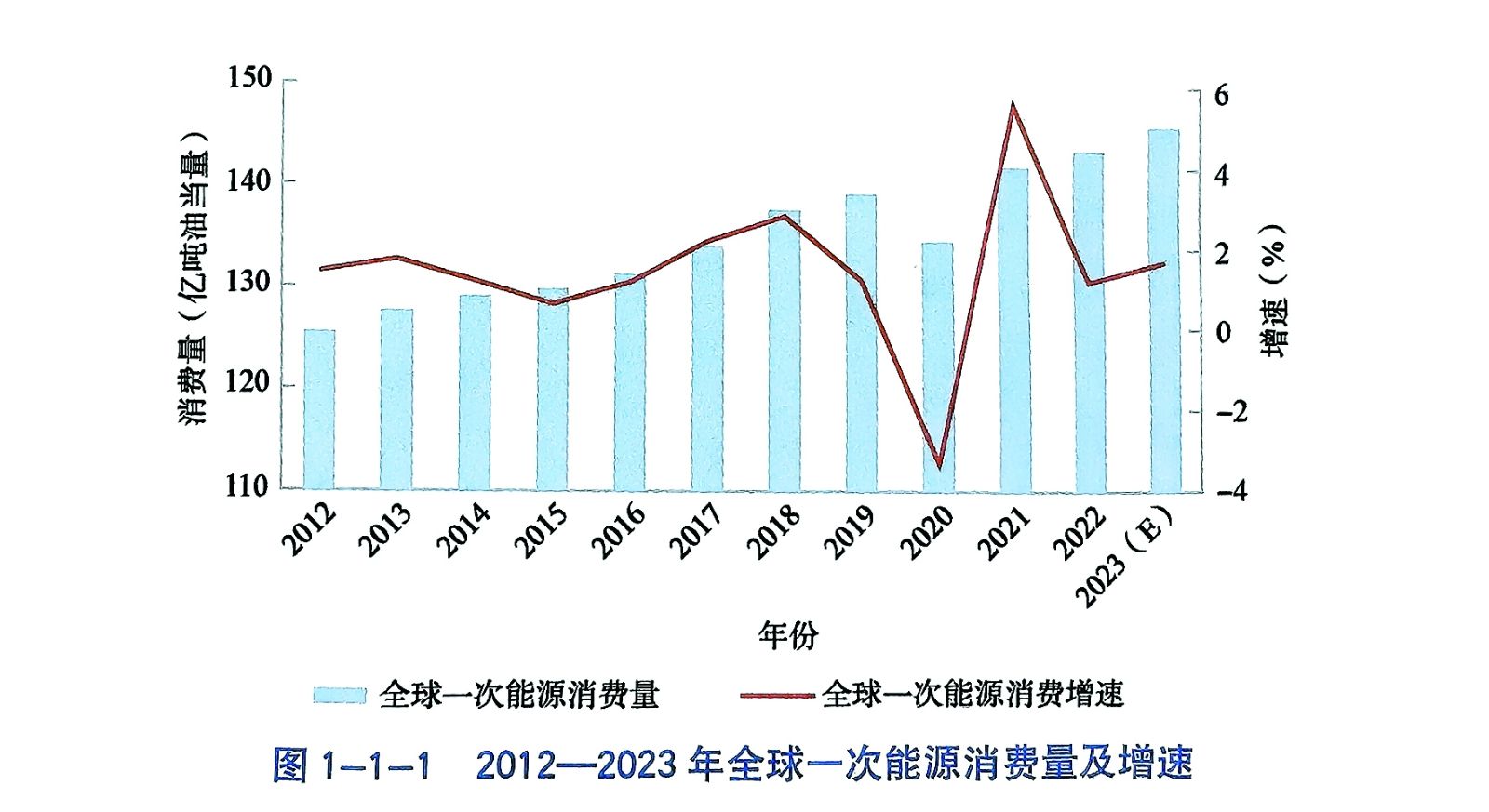
The global energy development presents six major trends.
First, the level of energy security has improved, but the risks and challenges remain severe.
The prices of major energy commodities have dropped, and the global supply and demand have basically achieved a rebalancing. The price of oil has decreased by nearly 20%, the prices of natural gas and coal have dropped by more than 50%; the prices of lithium carbonate and photovoltaic components have decreased by more than 50%. The significant drop in energy prices has played an important role in maintaining global economic growth and controlling inflation.
The global energy security level has improved. The availability and affordability of energy have significantly increased, and the level of energy cleanliness has steadily risen. However, geopolitical issues, extreme climates, and non-traditional security risks have not subsided.
Second, the supply and demand are becoming more concentrated, and the competition among market forces has entered an intensified stage.
From the supply side, the supply share of non-OPEC (Organization of the Petroleum Exporting Countries) countries has further increased. In 2023, global oil supply increased by 1.3 million barrels per day, with the United States increasing production by more than 1 million barrels per day. The United States will remain the world's largest oil producer and largest LNG (liquefied natural gas) exporter for a long time. By 2035, the annual production of natural gas and the annual capacity of LNG in the United States will reach 1.2 trillion cubic meters and 160 million tons respectively.
From the demand side, the "southern decline and northern rise" trend continues. The proportion of oil consumption in Europe and North America in the global total will continue to decline, while the Asia-Pacific region will become the world's largest center for oil consumption and refining. The demand for natural gas in Europe continues to drop, and it is expected that by 2035, its share in global consumption will fall to 9%. The demand for natural gas in the Asia-Pacific region will increase from the current 930 billion cubic meters to 1.32 trillion cubic meters by 2035, rising to 27% of the global total.
In a situation where both supply and demand are becoming more concentrated, the buyer-seller game will further intensify.
Thirdly, the trade landscape has entered a period of profound adjustment, and two parallel markets have begun to emerge.
The global energy trade flow has shifted from the "counterclockwise" direction to the "clockwise" direction. The EU's sanctions on Russia's energy exports have prompted Russia to expand its exports to the Asia-Pacific region. At the same time, the United States' exports of LNG and refined oil to Europe have increased significantly.
The energy trade is showing a trend of polarization. From the global flow driven by economic benefits to regional cooperation dominated by political positions, two parallel markets have begun to emerge, one for the developed countries of the West and the other for some developing countries.
Fourth, the trend of fragmentation and polarization has intensified, and global energy governance is entering a period of significant transformation.
The global consensus on jointly addressing climate change and cooperating to ensure energy security is facing challenges. Global energy governance is in a severe deficit state, and the governance pattern will be reshaped at a faster pace. The competition for market话语权 between resource-rich countries and consuming countries has intensified, and OPEC, the IEA (International Energy Agency), and developed countries' organizations such as G7 have significant differences in their judgments on global oil and gas demand and energy development paths. The governance of key minerals shows a "camping" trend, with the United States rallying allies and resource-rich countries to form an exclusive "green supply chain" alliance.
Fifth, the energy transition is continuing to accelerate, and the proportion of fossil energy consumption has dropped below 80% for the first time.
Investment in clean energy has grown rapidly. From 2015 to 2023, global investment in clean energy increased by 65.71% compared to investment in fossil energy. The proportion of fossil energy consumption dropped below 80% for the first time. However, in the medium and long term, oil and gas will remain the main energy supply sources. According to predictions, in 2040, the proportion of oil and gas in primary energy will still exceed 50%.
Sixth, the competitive landscape is undergoing a transformation, and the era of large-scale industry mergers has arrived.
The oil and gas industry has witnessed another wave of mergers and acquisitions similar to that in 1999. The energy merger activities led by international giants saw a significant increase in 2023, with the industry's merger scale exceeding 250 billion US dollars. Among them, ExxonMobil and Chevron successively acquired Pioneer Natural Resources Company and Hess Corporation for 59.5 billion US dollars and 53 billion US dollars respectively, with the total acquisition amount exceeding 110 billion US dollars, setting a new record for the mergers of US oil companies since 1999.
Without the emergence of disruptive technologies, scale has become an important means for oil companies to maintain their competitiveness. The application of information and intelligent technologies is breaking the nature of large-scale operations of large enterprises. With the continuous super-merger wave, major oil companies have dominated the integration of oil and gas market resources, which will play a positive role in stabilizing market fluctuations.
The situation of energy development in our country: Safety and transformation are equally important.
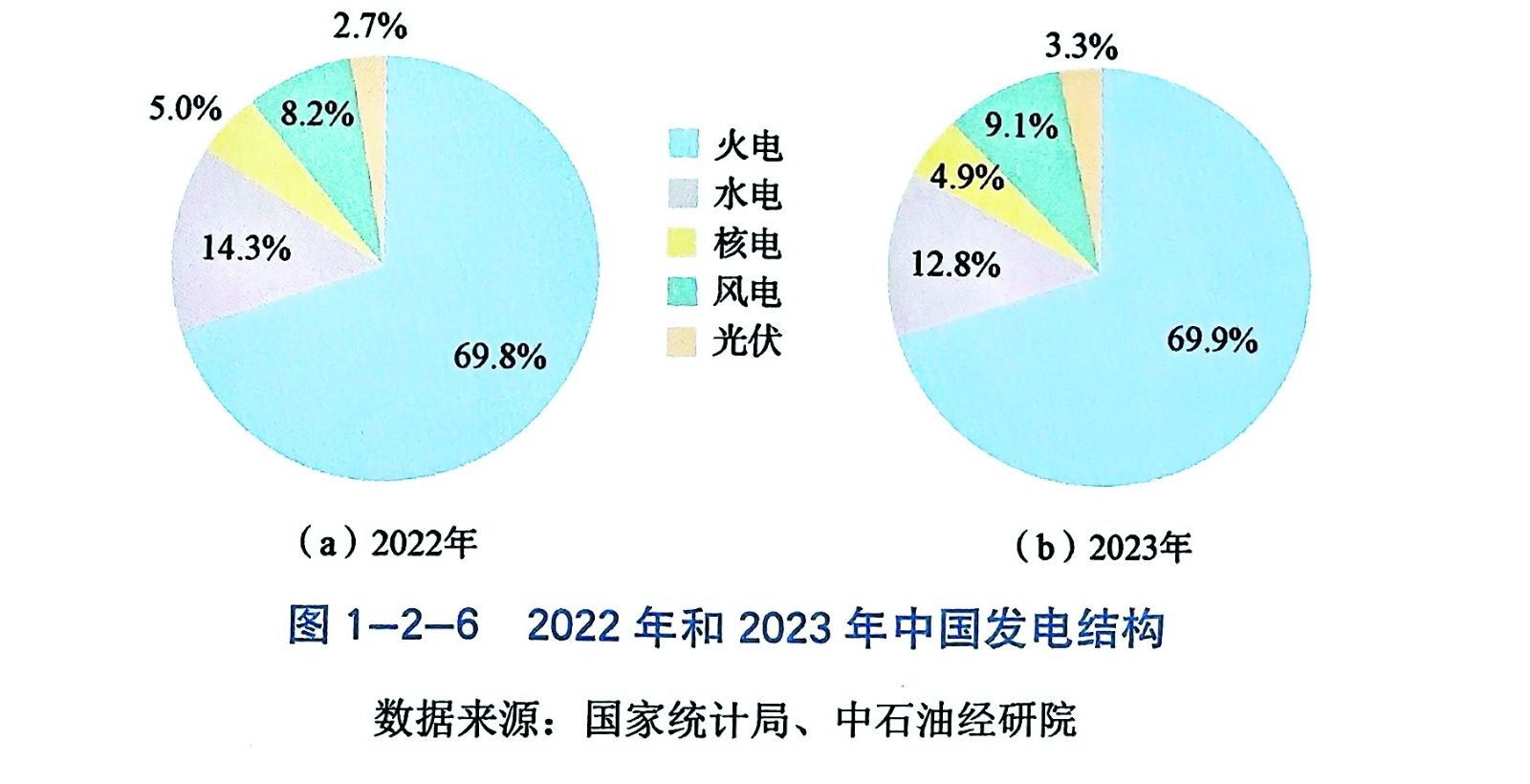
The "2023 Oil and Gas Industry Development Report" states that in 2023, China's energy supply and demand were generally stable and orderly. Coal production continued to increase, and the capacity for ensuring basic energy supply continued to strengthen. Significant achievements were made in oil and gas reserve expansion and production increase, with stable crude oil production and continuous growth in natural gas production exceeding 10 billion cubic meters for the seventh consecutive year. Domestic energy prices remained generally stable. The transformation of China's energy structure has accelerated, and the development momentum of new energy sources such as wind power and solar energy has been strong. Wu Mouyuan said that China's energy development presents five major situations:
One is to balance security and transformation, with the energy security guarantee capacity continuously improving. Over the past 10 years since the proposal of the "Four Revolutions and One Cooperation" new energy security strategy, China has attached great importance to energy security and effectively coordinated development security and green transformation. While continuously enhancing the energy self-sufficiency capacity, it has also actively promoted green and low-carbon development. The energy self-sufficiency rate has continued to rise. In 2023, the output of major domestic energy varieties all maintained growth, with the total energy supply approximately 4.894 billion tons of standard coal (3.426 billion tons of standard oil). The energy self-sufficiency rate rose to 85.6%, an increase of 7.2 percentage points compared to 2016.
Second, the energy transition is accelerating continuously, and the construction of the new energy system is entering the foundation-building stage. The construction of the new energy system, as the fundamental task for the high-quality development of China's energy industry, will long lead the direction of China's energy industry development. China is currently in the foundation-building stage of the new energy system. At this stage, stabilizing oil production and increasing gas supply is the key to achieving a phased approach of establishing first and then breaking, and moving towards the acceleration period and completion period more quickly.
Thirdly, oil and gas will play a crucial role in the new energy system. Stable supply of oil and gas is an important guarantee for economic development. Economic recovery is supported by strong energy supply. The implementation of economic stimulus policies and the rapid market recovery after the pandemic have driven the demand for energy such as oil and gas. The effectiveness of oil and gas supply guarantee and price stabilization has been remarkable. In 2023, the consumption of oil reached 756 million tons, an increase of 11.5% compared to the previous year, setting a historical peak record. The consumption of natural gas grew rapidly despite a low base. Affected by the economic recovery, the decline in domestic LNG prices, and the increase in gas consumption for power generation, the domestic consumption of natural gas in 2023 was 391.7 billion cubic meters, an increase of 6.6% compared to the previous year, with an increase of 24.2 billion cubic meters.
In the short term, petroleum will still maintain its dominant position in energy consumption for transportation. With the construction of a new energy system, the development positioning of petroleum in China shifts from being the main energy source for transportation to providing material resources for economic and social development. The peak period from 2021 to 2030 is a plateau stage. Petroleum is the main energy source in the transportation sector. Transportation-related oil consumption will gradually peak, while chemical oil consumption will continue to increase, reaching a peak level of 780-800 million tons. From 2031 to 2050, it will be a period of steady decline, with petroleum consumption gradually shifting from being dominated by fuel attributes to being dominated by raw material attributes. From 2051 to 2060, it will be a return to the raw material period, with the core function of petroleum as a raw material fully exerted, and the consumption scale dropping to 200-250 million tons. In the future, the demand for chemical new materials in the new energy field will maintain rapid growth. The new material markets of ultra-high molecular weight polyethylene, carbon fibers, EVA, and POE will enjoy an opportunity period. Petroleum-derived petroleum-based carbon materials have high thermal and electrical conductivity and excellent mechanical properties, making them excellent integrated structural and functional materials. They will be widely applied in multiple fields and industries such as aerospace, new energy, electric vehicles, information electronics, rail transit, mechanical equipment, metallurgy, and chemical engineering.
Natural gas, leveraging its diverse advantages such as cleanliness, low carbon emissions, flexibility, and high efficiency, will become an important energy source that supports the comprehensive green transformation of China's economy and society. It will continuously replace high-pollution fuels and facilitate the large-scale development of new energy, playing a significant role in urban gas, transportation, industry, and power generation sectors.
Natural gas serves as a crucial supporting energy for the transition from the current energy system to the new one. It will experience rapid growth before 2035 and is the main energy source for the comprehensive green transformation of China's economy and society. It will continuously replace high-pollution fuels and integrate with new energy sources. From 2035 to 2040, it will enter a peak plateau period, driven mainly by integration with new energy, with a demand peak of approximately 600 billion cubic meters per year. It will serve as a peak-shaving resource for the power system and replace high-pollution fuels in various fields such as land-based freight transportation and ocean shipping. The decentralized use of urban gas will gradually decrease. From 2041 to 2060, it will enter a consumption decline period. Natural gas will become an important guarantee energy for the new energy system. The centralized decarbonization utilization model of "natural gas + CCUS (Carbon Capture, Utilization and Storage)" will be the main mode, fully leveraging its flexible and easy-to-store characteristics, and serving as a peak-shaving resource for the energy system.
Fourth, efforts to stabilize oil production and increase gas production have been intensified, and the country's self-sufficiency in oil and gas has continued to improve. Oil and gas production has maintained growth for several consecutive years. In 2023, the crude oil output was approximately 209 million tons, and it has continued to increase for six consecutive years since 2018. It is expected to continue to grow slightly in 2024. The natural gas output was 235.3 billion cubic meters, and it has increased by more than 10 billion cubic meters each year for seven consecutive years. The remaining proven recoverable reserves of oil and gas have continued to increase. In 2023, the remaining proven recoverable reserves in China were 3.806 billion tons. Since 2015, the overall trend has been upward, and the ratio of production to reserves has remained at around 18.5 in recent years, an increase of 2.1 compared to 2015.
Offshore oil and gas as well as unconventional oil and gas have become the main sources for increasing reserves and production. The output of offshore crude oil has accounted for over 60% of the national increase in oil production for four consecutive years. The output of unconventional natural gas has exceeded 96 billion cubic meters, accounting for 43% of the total natural gas production, becoming an important growth pole for increasing reserves and production of natural gas. Among them, the output of tight gas exceeds 60 billion cubic meters and the output of coalbed methane exceeds 11 billion cubic meters.
The "two deeps and one non" strategy has achieved multiple breakthroughs. In 2023, the shale gas output reached nearly 25 billion cubic meters, an increase of 4.9% compared to the previous year; the shale oil output exceeded 4 million tons, reaching a new high and increasing by 33.3% compared to the previous year. The output of deep and ultra-deep layers in China reached 11.8 million tons; the proven geological reserves of deep coalbed methane exceeded 300 billion cubic meters, becoming an important breakthrough point for unconventional natural gas in China.
In China, the transformation and high-quality development of oil enterprises have achieved new breakthroughs. The operating performance has remained stable, and the profitability has continued to increase. The profits of the three major oil companies have remained at a high level, and the correlation between profitability and oil prices has weakened. The oil and gas production has reached a new historical high, and the scale of refining and sales has significantly increased. At the same time, Chinese oil enterprises have also formed a unique transformation model for petroleum energy companies. They actively布局 new energy businesses, and the integration and development of oil and new energy have been carried out in a coordinated manner. Many new companies related to charging and swapping, photovoltaic power generation, and hydrogen energy have been established successively. The integration and development of oil and new energy have created many new models, continuously accelerating the green transformation of the oil industry and achieving the transformation of oil fields to geothermal fields, green electricity fields, green hydrogen fields, and carbon storage fields.
Yuan Luyan, the director of the Energy Strategy Research Institute of the China Petroleum and Natural Gas Technology Research Institute, stated that in 2024, the energy industry will remain a crucial area of competition among major countries. The competition will expand from traditional oil and gas to the new energy industry chain, and the competition in the form of green trade barriers will become more intense. The focus of policies of various countries will shift to three major areas: ensuring stable and secure energy supply, promoting high-quality development of clean energy, and facilitating fair and orderly transformation of fossil energy. China will focus on promoting the construction of new energy systems, adhere to the bottom line of energy security, firmly promote energy transformation and development, and strive to build a clean, low-carbon, and safe and efficient energy system.
Xu Fengying, the vice president of the China Petroleum Society, stated that the oil and gas industry should work together to jointly promote the green and low-carbon transformation while maintaining the security and stability of the global energy industry's supply chain. Various industry organizations, energy enterprises, and research institutions should engage in practical cooperation.

